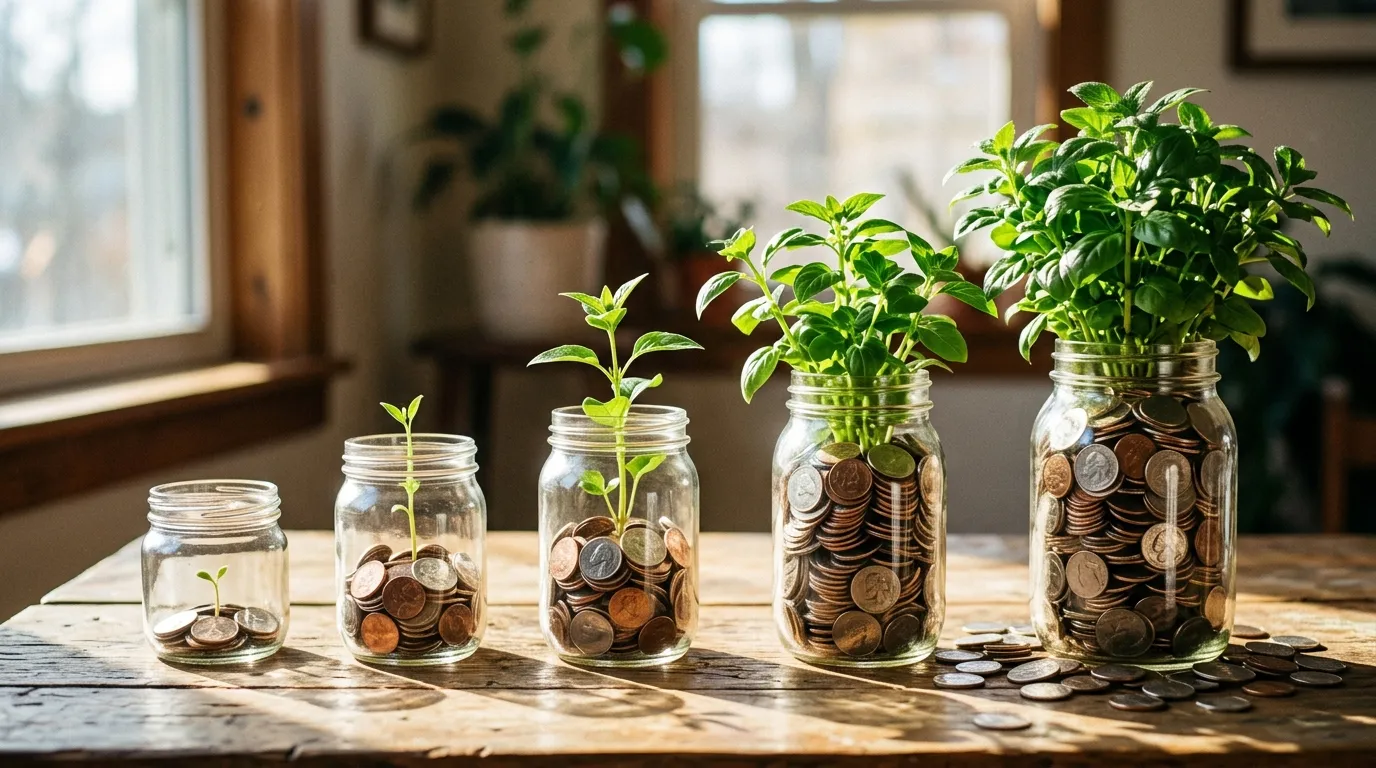
Albert Einstein reportedly called compound interest the "eighth wonder of the world," noting that "he who understands it, earns it... he who doesn't... pays it." While it sounds like an abstract banking concept, compound interest is the single most powerful mathematical engine behind building long-term personal wealth—and, conversely, the force that makes high-interest debt so difficult to escape.
Understanding how compound interest works, why time is your greatest financial asset, and how compounding accelerates over multi-decade horizons transforms the way you approach saving, investing, and retirement planning.
Simple Interest vs. Compound Interest
To appreciate compounding, it helps to contrast it with simple interest:
- Simple Interest: Interest is calculated solely on the original principal amount you deposited or borrowed. If you invest $10,000 at a simple 5% annual interest rate, you earn exactly $500 every single year, regardless of how long the money sits.
- Compound Interest: Interest is calculated on the initial principal plus all the accumulated interest from previous periods. In the compounding model, your money earns "interest on interest," creating a snowball effect where growth accelerates over time.
The Compounding Mechanism in Action
Imagine investing $10,000 at an annualized return of 7%. Here is how your balance grows over 30 years with annual compounding:
- Decade 1 (Years 1–10): Your balance grows from $10,000 to approximately $19,672. The initial growth feels steady, adding modest gains each year.
- Decade 2 (Years 11–20): Your balance expands from $19,672 to $38,697. Because the base amount is larger, the same 7% return generates significantly more dollars each year than it did in the first decade.
- Decade 3 (Years 21–30): Your balance surges from $38,697 to $76,123. In this final decade, the accumulated interest dwarfs your original $10,000 contribution, illustrating why the curve bends sharply upward over time.
Why Time Is Your Most Valuable Financial Asset
Because compounding relies on exponential growth rather than linear addition, when you start saving matters far more than how much extra cash you scrape together later in life.
Consider two investors, Alex and Jordan, who both invest in the same index fund yielding a 7% average annual return:
- Alex starts investing $200 per month at age 25 and stops contributing entirely at age 35 (10 years of total contributions, totaling $24,000).
- Jordan waits until age 35 to start, but invests $200 every single month for 30 consecutive years until age 65 (35 years of total contributions, totaling $84,000).
Even though Jordan contributed more than three times as much total cash out-of-pocket, Alex's early start allows compounding to work for an extra decade. By age 65, Alex's portfolio will have significantly outperformed Jordan's simply because those early dollars had decades longer to multiply.
Practical Strategies to Maximize Compound Interest
- Start Today, No Matter the Amount: Waiting for a "perfect time" or a larger salary costs you the earliest, most valuable years of compounding. Even modest contributions started immediately outperform larger sums started late.
- Automate Your Savings: Set up automatic transfers on payday to move money from your checking account into investments or high-yield savings. Automation removes the friction of willpower and ensures consistent compounding.
- Reinvest Dividends and Earnings: If you hold stocks or funds that pay dividends, configure your account to automatically reinvest those payouts to buy additional shares rather than taking them as cash. This feeds the compounding loop directly.
- Beware of Reverse Compounding (High-Interest Debt): Compound interest is a double-edged sword. When you carry credit card balances at 20% APR, reverse compounding works against you, causing your debt to multiply rapidly. Eliminating high-interest debt is effectively the highest-yielding "investment" you can make.
Frequently Asked Questions (FAQ)
What is the Rule of 72? The Rule of 72 is a simplified mental shortcut used to estimate how long it takes for an investment to double in value. You divide 72 by your annual fixed interest or return rate. For example, at an 8% annual return, your money will double in approximately 9 years (72 ÷ 8 = 9).
Does compounding frequency matter? Yes. Interest can compound annually, monthly, daily, or continuously. The more frequently interest compounds (e.g., daily vs. annually), the faster your balance grows because interest begins earning interest sooner. Most modern savings accounts compound daily and pay out monthly.
How does inflation affect compound interest? Inflation is a negative compounding force that erodes your purchasing power over time. If your investments compound at 6% per year while inflation runs at 3%, your real compounding growth rate is closer to 3%. This is why keeping long-term wealth in cash rather than growth assets loses ground.
Is compound interest guaranteed in the stock market? No. While historical broad-market index returns average around 7% to 10% before adjusting for inflation over multi-decade periods, stock market returns fluctuate year to year. Compounding in equities requires a long-term time horizon to weather short-term volatility.
Sources & Further Reference
- U.S. Securities and Exchange Commission (SEC) – Compound Interest Calculators and Investor Education
- Investor.gov – The Power of Compounding Money Over Time
- Financial Industry Regulatory Authority (FINRA) – Smart Saving and Investing Principles
Disclaimer: This article is intended for general educational and informational purposes only and does not constitute professional financial or investment advice. Personal financial situations vary; consult a certified financial planner or advisor for guidance tailored to your specific circumstances.