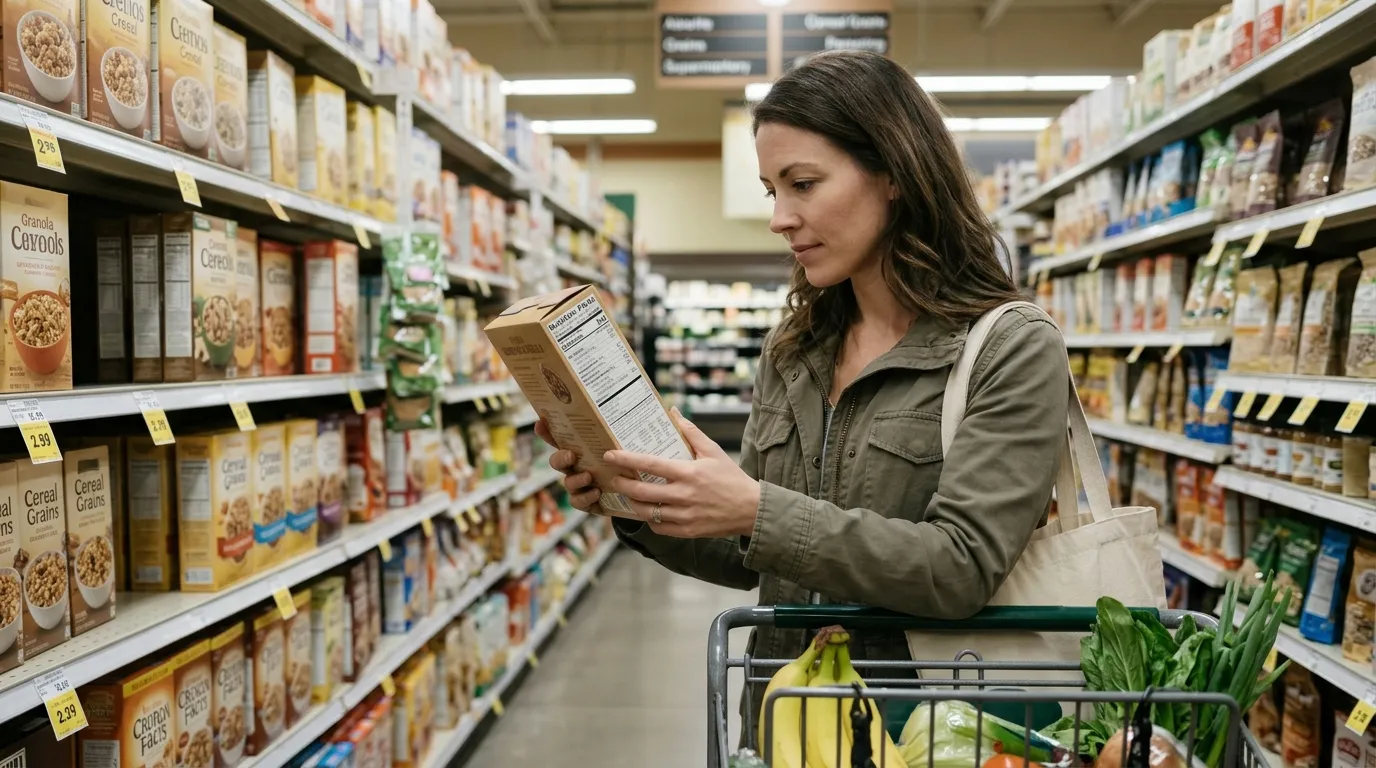
Navigating grocery store aisles can often feel overwhelming, with marketing claims like "natural," "low-fat," or "multigrain" competing for your attention on the front of packages. However, the true story of what you are consuming lies on the back or side of the package: the Nutrition Facts panel and the ingredient list.
Learning how to systematically decode these labels empowers you to cut through misleading marketing, understand portion realities, and select foods that align with your nutritional and wellness goals.
Part 1: Deconstructing the Nutrition Facts Panel
Modern nutrition labels are structured around standardized components designed to help consumers assess nutrient density and caloric intake at a glance.
- Serving Size and Servings Per Container: The starting point of any label evaluation. All nutrient and calorie numbers listed on the panel correspond only to that specific serving size, not necessarily the entire package. If a bag lists 200 calories per serving but contains 3 servings, eating the whole bag means consuming 600 calories.
- Calories: A measure of the energy provided by a single serving of the food. Evaluating calories in relation to your daily energy needs helps maintain body composition goals.
- Percent Daily Values (%DV): Based on a standard 2,000-calorie daily diet, the %DV helps you determine whether a nutrient contributes a high or low amount to your daily total. As a general rule of thumb:
- 5% DV or less per serving is considered low for a given nutrient.
- 20% DV or more per serving is considered high.
- Fats, Sodium, and Added Sugars: Focus on limiting saturated fats, trans fats, and excess sodium. Additionally, differentiate between naturally occurring sugars (found in whole fruit and dairy) and added sugars, which provide empty calories without nutritional fiber or micronutrients.
- Dietary Fiber, Protein, and Micronutrients: Look for foods higher in dietary fiber, potassium, calcium, and iron to support long-term metabolic and digestive health.
Part 2: Mastering the Ingredient List
While the Nutrition Facts panel shows the quantitative breakdown of macros and micros, the ingredient list reveals the qualitative reality of what you are actually eating.
- Descending Order of Dominance: Ingredients are legally required to be listed in descending order by weight. The ingredient present in the largest amount appears first, while the smallest amounts appear at the end. If sugar, high-fructose corn syrup, or refined flour appears within the first three items, the product is heavily refined.
- Spotting Hidden Sugars: Food manufacturers often use multiple forms of sweeteners to mask total sugar content. Look out for names ending in -ose (dextrose, fructose, maltose), syrups (corn syrup, malt syrup), cane juice crystals, and nectar.
- Unpronounceable Additives and Preservatives: While many chemical additives are legally approved preservatives or emulsifiers, scanning for short, recognizable ingredient lists generally indicates a product closer to its whole-food state.
Comparison of Nutritional Claims vs. Reality
| Front-of-Package Claim | What It Actually Means | What to Check on the Label |
|---|---|---|
| "Multigrain" | Contains multiple types of grain, but they may all be heavily refined white flour. | Look for "100% whole grain" and check fiber content. |
| "Low-Fat" | Fat was reduced, but sugar, sodium, or thickeners are often increased to compensate for flavor. | Compare sugar and carbohydrate counts against standard versions. |
| "Made with Real Fruit" | May contain only trace amounts of fruit concentrate surrounded by added sugars and syrups. | Check if fruit appears near the top of the ingredient list. |
| "Light / Lite" | Can refer to lighter color, texture, or taste—not necessarily fewer calories or fat. | Review the calorie and fat breakdown per serving on the panel. |
Step-by-Step Workflow for Reading Labels While Shopping
- Check the Serving Size First: Determine if the serving size reflects a realistic portion of what you plan to eat.
- Evaluate the Macro Ratio: Assess protein and fiber content relative to total carbohydrates and calories to gauge satiety and nutritional value.
- Scan for Added Sugars and Sodium: Ensure added sugars and sodium levels remain within sensible daily thresholds.
- Inspect the Top Three Ingredients: Confirm that whole food sources (such as whole oats, vegetables, beans, or lean meats) lead the ingredient list before processed oils and refined sweeteners.
Frequently Asked Questions (FAQ)
Are "organic" or "non-GMO" labels indicators of better nutritional quality? Not necessarily. While organic and non-GMO certifications ensure specific agricultural standards (such as the restriction of synthetic pesticides or genetically modified organisms), an organic cookie or organic potato chip remains a processed snack high in sugar and fat. Nutritional quality depends on the overall nutrient profile, not just agricultural labels.
How can I tell if a bread is truly whole grain? Do not rely on front-of-package colors or words like "wheat bread." Check the ingredient list: the very first ingredient should explicitly state "100% whole wheat flour" or another whole grain, and the product should offer at least 2 to 3 grams of dietary fiber per serving.
Why do food labels sometimes round calorie counts? Regulatory standards allow manufacturers to round calorie and nutrient figures within specific legal tolerances to account for natural variations in agricultural ingredients and standard laboratory testing margins.
Sources & Further Reference
- U.S. Food and Drug Administration (FDA) – How to Understand and Use the Nutrition Facts Label
- Harvard T.H. Chan School of Public Health – The Nutrition Source: Decoding Food Packaging Claims
- World Health Organization (WHO) – Guidance on Dietary Sugars and Sodium Intake