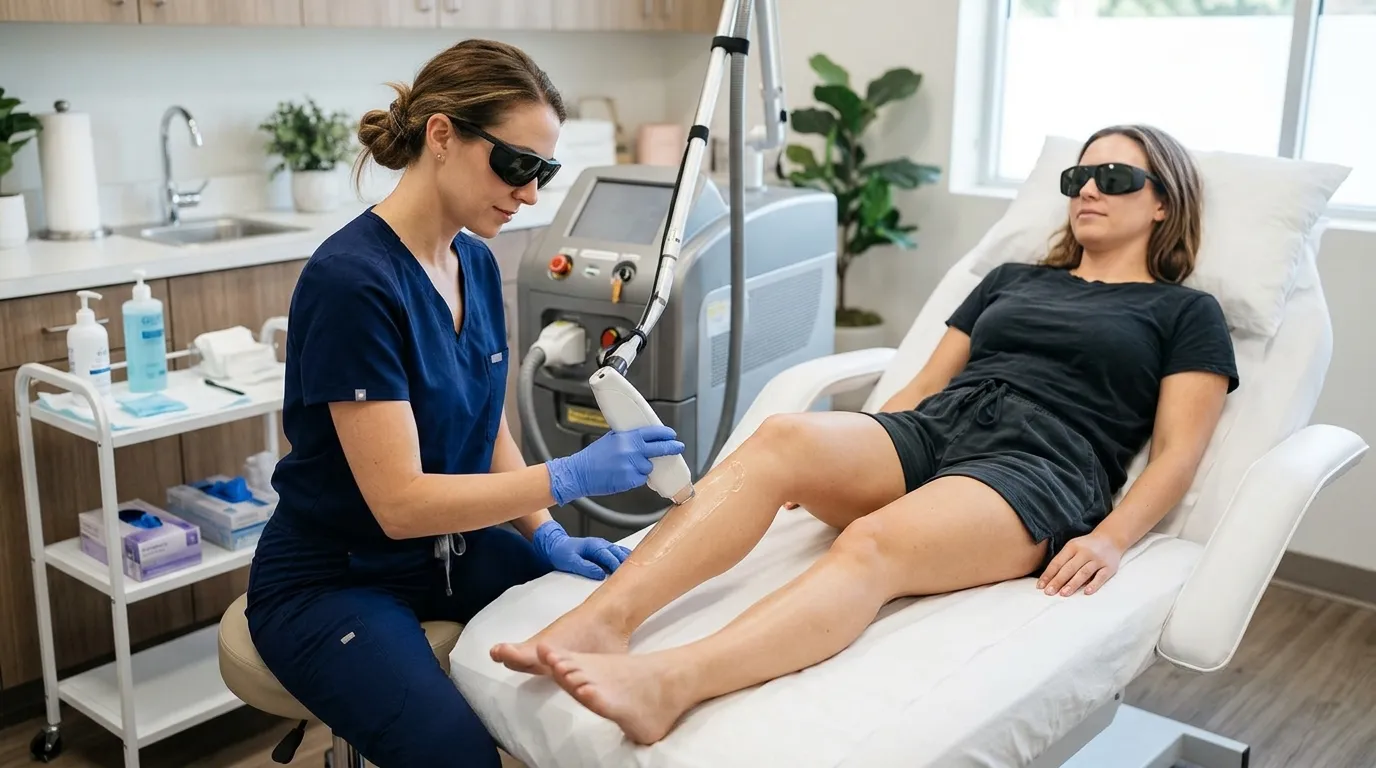
Laser hair removal has become one of the most popular aesthetic procedures worldwide, offering a long-term solution for unwanted body and facial hair. Unlike shaving or waxing, which only remove the hair shaft at or above the skin's surface, laser technology targets the hair follicle itself to inhibit future growth.
Understanding the biophysical mechanisms, expected session timelines, and potential side effects ensures realistic expectations and optimal treatment outcomes.
Part 1: The Biophysical Mechanism (Selective Photothermolysis)
Laser hair removal operates on a scientific principle known as selective photothermolysis.
- Targeting Melanin: The device emits a precise wavelength of concentrated light energy that is preferentially absorbed by melanin (the pigment responsible for dark color) concentrated within the hair shaft and hair follicle.
- Thermal Destruction: Light energy is rapidly converted into thermal (heat) energy down the shaft of the hair, reaching the hair bulb and destroying the germinative stem cells responsible for hair regeneration—all without damaging the surrounding epidermal tissue.
- The Anagen Phase Requirement: Lasers are only effective when hair is in its active growth phase (anagen phase). At any given time, only a fraction of your hair follicles are actively growing, which is why a single treatment can never eliminate all hair permanently.
Part 2: Treatment Sessions and Expected Results
Because hair grows in distinct cycles (anagen, catagen, and telogen), achieving significant hair reduction requires a series of treatments spaced at regular intervals.
- Typical Number of Sessions: Most patients require 6 to 8 sessions, spaced 4 to 8 weeks apart, depending on the treatment area (facial hair cycles are faster than leg or back hair cycles).
- Expected Reduction: Successful completion of a full course typically yields a 70% to 90% permanent reduction in hair density. Any hair that does eventually regrow tends to be significantly finer, lighter, and sparser.
- Maintenance: Occasional annual maintenance sessions may be required to target dormant follicles activated by hormonal shifts over time.
Part 3: Possible Side Effects and Risk Mitigation
While laser hair removal is exceptionally safe when performed by certified professionals using medical-grade equipment, mild temporary side effects are normal:
- Immediate Post-Treatment Erythema (Redness) and Edema: Mild swelling and redness around individual hair follicles (resembling a mild sunburn) are normal and typically subside within 24 to 48 hours.
- Pigmentary Alterations: Temporary hyperpigmentation (darkening) or hypopigmentation (lightening) can occur, particularly in individuals with darker skin tones or recent sun exposure. Using advanced Nd:YAG lasers for darker skin types minimizes this risk.
- Rare Risks: Blistering, crusting, or scarring can occur if improper energy settings are used or if the skin has been recently tanned. Strict avoidance of sun exposure and tanning beds before and after treatment is mandatory.
Comparison of Hair Removal Methods
| Method | Mechanism | Duration of Results | Primary Limitation |
|---|---|---|---|
| Shaving | Trims hair shaft at skin level | 1 to 3 days | High frequency of razor burn and stubble |
| Waxing / Sugaring | Mechanical extraction from root | 3 to 6 weeks | Painful; requires hair re-growth between sessions |
| Electrolysis | Chemical/heat destruction via probe | Permanent (hair-by-hair) | Extremely time-consuming and costly for large areas |
| Laser Hair Removal | Thermal destruction via light absorption | Long-term reduction (years) | Requires multiple sessions; less effective on blonde/gray hair |
Step-by-Step Patient Preparation Protocol
- Cease Plucking and Waxing: Stop waxing, plucking, or epilating at least 4 to 6 weeks prior to your appointment. The laser requires an intact hair root (target) inside the follicle to be effective.
- Shave the Treatment Area: Shave the area 24 to 48 hours before your session. Shaving removes surface hair so the laser energy is directed entirely into the follicle beneath the skin rather than burning surface hair.
- Avoid UV Exposure: Strictly avoid tanning beds, natural sun tanning, and self-tanners for at least 3 to 4 weeks before and after your treatment to prevent adverse pigment reactions.
- Skip Retinoids and Active Acids: Discontinue topical retinoids, glycolic acid, or chemical exfoliants on the treatment area 5 to 7 days prior to avoid skin barrier sensitization.
Frequently Asked Questions (FAQ)
Does laser hair removal work on blonde, red, or gray hair? Traditional lasers target dark pigment (melanin). Consequently, blonde, red, gray, or white hairs lack sufficient melanin to absorb the thermal energy effectively and do not respond well to standard laser treatments.
Is laser hair removal completely permanent? While the FDA classifies laser hair removal as "permanent hair reduction" (meaning a significant percentage of hair is permanently destroyed), hormonal fluctuations (such as pregnancy, PCOS, or perimenopause) can occasionally stimulate dormant follicles to produce new fine hairs over time.
Is the procedure painful? Most patients describe the sensation as feeling like a warm rubber band snapping against the skin. Modern medical laser devices utilize built-in dynamic cooling tips (cryogen spray or chilled sapphire tips) that numb the epidermis instantly, making the treatment very manageable.
Sources & Further Reference
- American Academy of Dermatology (AAD) – Laser Hair Removal Guidelines and Safety Standards
- Journal of Clinical and Aesthetic Dermatology – Long-Term Efficacy and Safety of Diode and Alexandrite Lasers
- Cleveland Clinic – Understanding Laser Hair Removal and Post-Care Protocols